Automatic Locks, Results Publishing, and Candidate Timeline: A More Reliable Hiring Process
Introduction
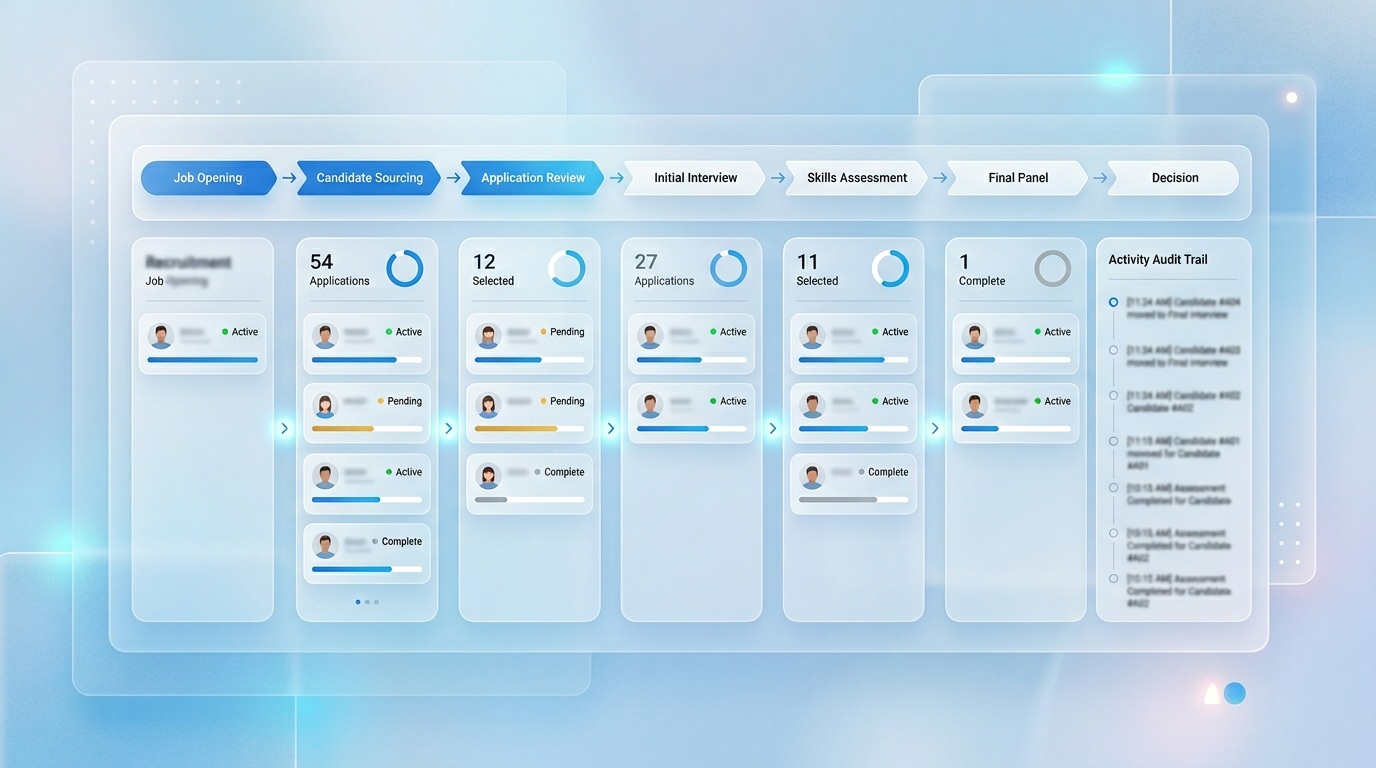
In a manual selection process, three things often go wrong at once: a stage moves forward before the previous one is finished, a result is published off the agreed schedule (or with the wrong list), and the candidate is left in the dark — calling and emailing to find out whether they advanced. Each of these failures alone already creates rework and distrust. Together, they undermine the credibility of the entire selection. This article shows how three Plooral capabilities — automatic stage locks, automated results publication, and the candidate timeline — address these failures at the root.
Automatic stage locks: what they are and why they matter
Automatic stage locks are controls that prevent a selection process from moving to the next phase before the current one is properly completed and recorded. In practice, they work like a sequential lock: interviews only open after the test has been scored and the approved list has been published; final approval only happens after every prior stage has been completed and documented. That sequencing sounds simple, but it addresses one of the most serious issues flagged in audits: a sequence break, when someone is evaluated or approved in a stage they should not have reached. With the lock active, that shortcut is no longer possible, because the system does not release the next phase without completion of the previous one. In short: automatic locks help ensure no one skips stages and that each phase only starts when the previous one is closed and recorded. Impersonality becomes a technical rule — not a matter of goodwill.
What the locks help prevent
• — Improper advancement of candidates who did not complete an eliminatory stage.
• — Mid-process changes to criteria, since configuration is locked after publication.
• — Timeline inconsistencies, with stages starting before the previous one is officially published.
• — Human sequencing errors, common when control depends on spreadsheets and memory.
Automated results publication: standardization and on-time delivery
Automated results publication lets you schedule, for each stage, the exact date and time the approved list will be released — and lets the system publish on its own at that moment. Instead of depending on someone to build the list, check it, and release it manually, the organization configures once and disclosure happens in a standardized, punctual way. That has a direct effect on transparency. When results always go out in the expected format and on schedule, the window of suspicion between the end of a stage and a manual release disappears. Candidates know exactly when and where they will see the result, and the organization has an automatic record that publication happened as planned.
Why scheduled publication protects the organization
• — Provable on-time delivery, with an automatic record of the date and time of disclosure.
• — Standardized lists, reducing formatting errors or improper inclusions.
• — Traceability, because every publication is documented in the audit trail.
• — Fewer challenges, since criteria and the calendar are visible to everyone from the start.
Candidate timeline: real-time transparency
The candidate timeline is a visual timeline where each person follows, in real time, every phase of the selection process — with dates, times, instructions, and the results of each stage. It is what appears on the “Selection process stages” screen: a clear sequence, from the start of applications through the final result, where candidates see where the process stands and what comes next. Each stage shows the date and time (in the official time zone), an objective description of what happens, and, when applicable, direct access to that phase’s approved list. Candidates no longer depend on phone calls and emails to know whether they advanced, because the information is available in an organized way — and equally for everyone.
Example of a selection process timeline
This model, based on the example from Plooral’s own screen, shows how the timeline turns a process that used to feel opaque into a clear, predictable journey. Candidates know what to expect, and the organization communicates uniformly — without one-off messages that create noise and unequal treatment.
How the three capabilities work together
The real value appears when locks, automated publication, and the timeline operate as one. The lock helps ensure each stage only advances when complete; automated publication releases that stage’s result on schedule; and the timeline shows all of it to the candidate in real time. The three reinforce each other:
• — The stage is completed and locked, preventing improper advancement.
• — The result is published automatically at the scheduled time, in a standardized way.
• — The candidate timeline updates immediately, with the new list and the next phase.
• — Each of these actions generates an automatic record in the organization’s audit trail.
In one sentence: the lock controls the process internally, automated publication communicates officially, and the timeline gives candidates visibility. Together, they make the selection sequential, punctual, and transparent by design.
For the organization
Locks and automated publication sharply reduce the risk of audit findings, because they remove sequence breaks and delayed disclosure — two of the most common issues in oversight. Everything is recorded, which makes accountability immediate. HR also gains time, since the team no longer has to build and release lists manually at every stage.
For the candidate
The timeline offers predictability and respect. People know when each result comes out, what they need to do, and where each phase will take place — without chasing information. That organized experience strengthens the organization’s employer brand, even among candidates who are not selected.
Conclusion
Automatic locks, scheduled results publication, and the candidate timeline are not just operational conveniences. They are mechanisms that put into practice the impersonality and transparency expected of Sistema S entities, Social Organizations, federations, and other overseen institutions. They help the process follow the right order, communicate at the right moment, and remain followable by everyone from start to finish. The result is recruiting that is safer for the institution and fairer for applicants.
Discover Plooral’s Transparency Mode
Automatic stage locks, scheduled results publication, and the candidate timeline are part of Plooral’s Transparency Mode — a way of running selection processes in which each phase advances at the right time, each result is disclosed in a standardized way, and candidates follow everything in real time. It is legal safeguard for your organization and a professional experience for applicants. Schedule a demo and see the timeline in action: https://plooral.com
Want to see Plooral in action?
Schedule a personalized demo and learn how to organize your recruitment processes.
Schedule a demo