5 Critical Mistakes in Personnel Selection at Entities Under Audit Oversight
Introduction
When Brazil's Federal Court of Accounts (TCU) looks at a hire, it is not looking for intent—it is looking for evidence. And that is exactly where most entities stumble. Not out of bad faith, but because they rely on manual processes that lose the trail of the decision. Below are the five mistakes that show up most often in findings related to recruiting—and how to avoid them. Important: the TCU primarily oversees the use of public resources. Entities such as Sistema S, Social Organizations (OSs), and bodies that receive transfers may fall within that oversight. You should confirm your entity's specific classification, because scope varies with the source of the funds.
Mistake 1: Selection criteria defined after you know the candidates
This is the most serious mistake—and the most common. When weights and requirements are adjusted after résumés arrive, the selection loses impersonality, even if the final choice is technically sound. To an auditor, movable criteria signal steering. How to avoid it: freeze the criteria before the vacancy opens and record that definition with a date. Technology helps by locking the vacancy configuration: after publication, weights cannot be changed without a record of who changed them, when, and why.
Mistake 2: Lack of publicity for the opportunity
Vacancies that circulate only by word of mouth raise the suspicion that the entity already had a name in mind. Even when the hire is legitimate, the absence of traceable disclosure weakens the defense. How to avoid it: publish the opportunity in an accessible channel and keep proof of that publication automatically. The point is not only to disclose—it is to be able to prove that you disclosed.
Mistake 3: Interviews without a script and without scoring
A free-form interview is comfortable for the manager and indefensible for the auditor. Without a standardized script and a scoring scale, it is impossible to show that all candidates were evaluated against the same parameters. How to avoid it: adopt structured interviews, with the same questions and the same scale for everyone, and record scores at the time of evaluation. Comparability is what sustains impersonality.
Mistake 4: Scattered documentation that depends on memory
When proof of a selection is scattered across emails, personal spreadsheets, and conversations, gathering everything during an inspection becomes an archaeological dig. Worse: gaps are interpreted against the entity. How to avoid it: centralize the audit trail. Every score, comment, elimination, and decision should live in a single repository, with date and responsible party. Documentation that is created automatically does not get lost.
Mistake 5: No treatment of conflicts of interest and nepotism
Hiring a relative of a director, supplier, or evaluator without a disqualification declaration is one of the most serious findings—and one of the easiest to avoid. The failure here is usually process, not intent. How to avoid it: include mandatory disqualification and recusal declarations in the flow and block progress without them. Nepotism rules need to live in the system, not only in the manual.
Why technology reduces human failure
Most findings do not stem from corruption, but from inconsistency. People forget to record, lose emails, apply different criteria on different days. A recruiting system with built-in governance closes those gaps because documentation no longer depends on individual discipline—it is produced by the flow itself. The manager decides, and the system provides the proof.
Meet Plooral's Transparency Mode
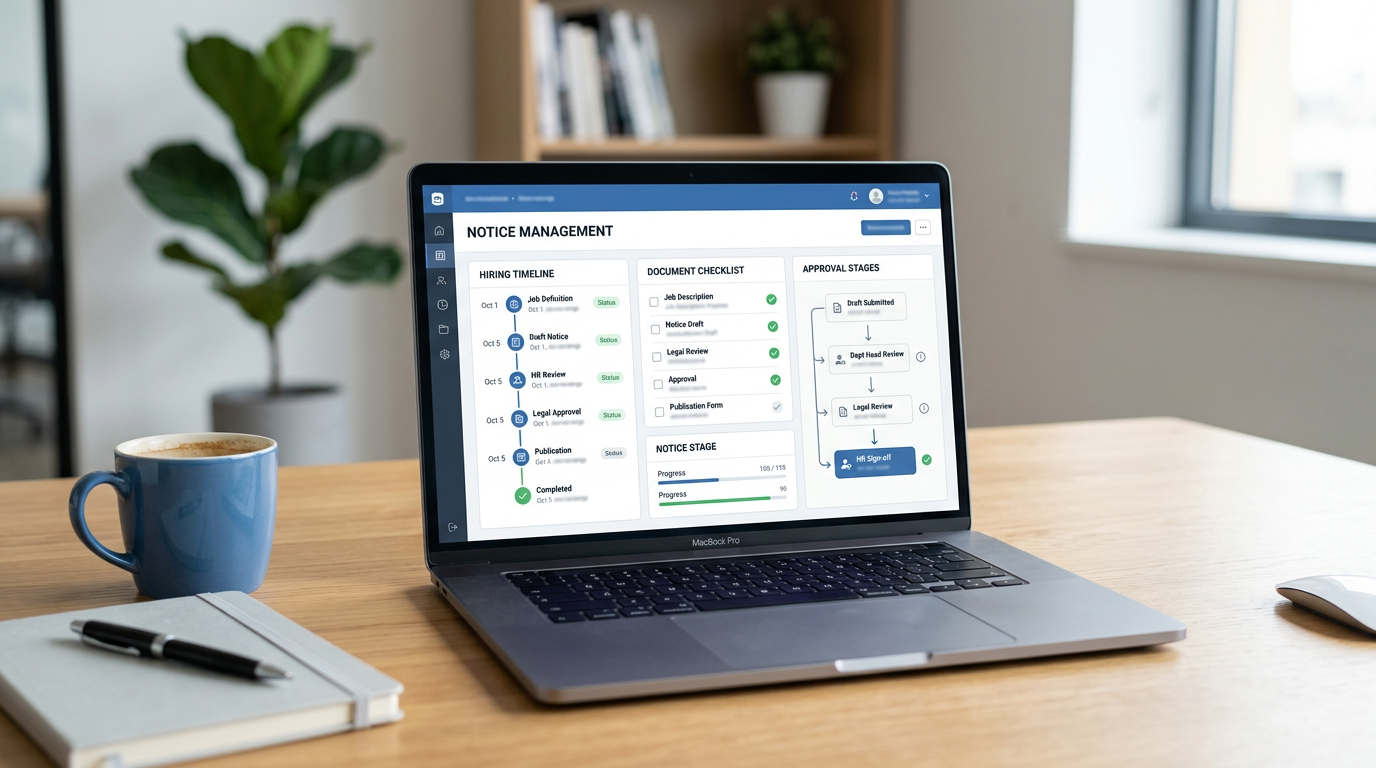
Plooral's Transparency Mode turns every stage of recruiting into an auditable record: objective criteria defined before the vacancy opens, traceable scoring for each candidate, an automatic audit trail, and reports ready for accountability. It is how you combine private-sector agility with the legal certainty expected of Sistema S, Social Organizations, and supervised entities. Schedule a demo and see how Transparency Mode can support management of your organization's selection processes.
Want to see Plooral in action?
Schedule a personalized demo and learn how to organize your recruitment processes.
Schedule a demo